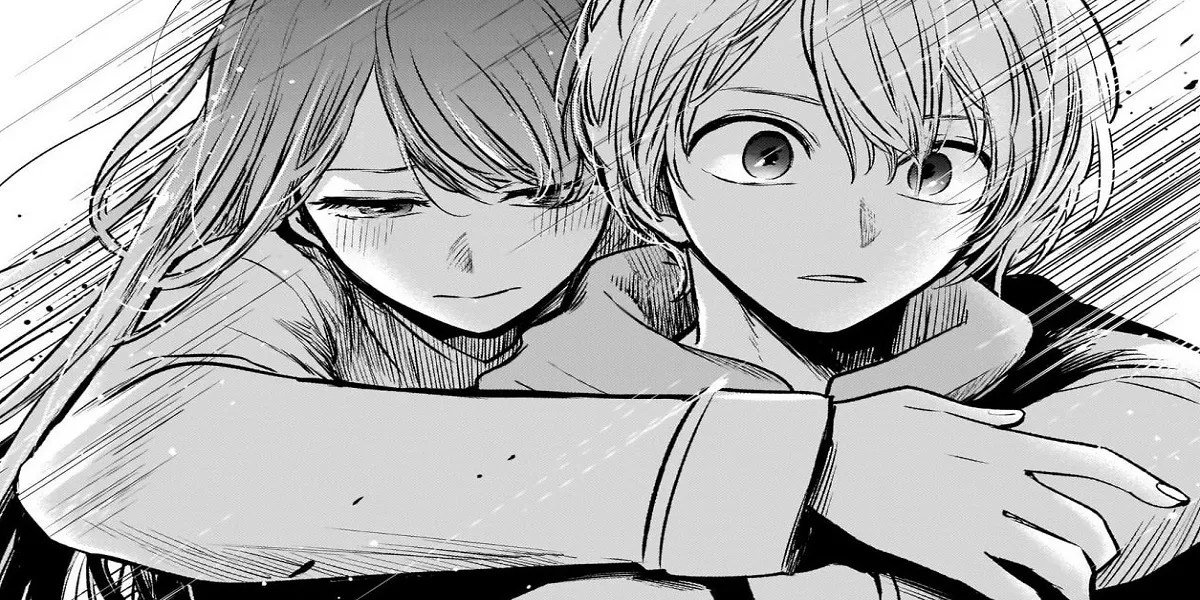
Many fans of both One Piece and Oshi no Ko might find themselves searching for connections between these two beloved anime and manga giants. Specifically, questions about the presence of One Piece's iconic swordsman, Roronoa Zoro, within the intricate world of Oshi no Ko often arise. Let's get straight to the point: based on the completed manga series of Oshi no Ko, which concluded with Chapter #166, Roronoa Zoro does not appear as a character in its narrative.
However, the curiosity sparked by such a search offers a unique opportunity to delve into the captivating, complex, and emotionally charged conclusion of Oshi no Ko. While Zoro's legendary swordsmanship isn't part of this story, Oshi no Ko delivers its own powerful saga of ambition, revenge, grief, and ultimately, hope. We're here to break down everything you need to know about how this groundbreaking series wrapped up, exploring the fates of its beloved characters and the profound messages it leaves behind.
The Core Truth: Roronoa Zoro's Place in Oshi no Ko
For those hoping for an epic crossover event, the Oshi no Ko manga concluded without any appearance from Roronoa Zoro. The series remained firmly rooted in its original world, focusing on the dark underbelly of the entertainment industry, the cycle of revenge, and the arduous journey toward healing. While the idea of such a crossover might be fun for fan speculation, the official narrative never ventured into integrating characters from other franchises.
Instead, Oshi no Ko provided a deeply human story filled with its own unique cast, each playing a crucial role in its powerful ending. If you're eager to understand the comprehensive story beats, character developments, and the ultimate message of the finale, you'll want to take a [deep dive into the Oshi no Ko ending explained](placeholder_link slug="oshi_no_ko_ending_explained_deep_dive" text="deep dive into the Oshi no Ko ending explained").
Unpacking Oshi no Ko's Emotional Finale
The Oshi no Ko manga, spanning 166 chapters, crafted a narrative rich with themes of reincarnation, the cutthroat nature of showbiz, and the pervasive quest for vengeance. Its conclusion, affectionately dubbed "The Last Chapter" or "Star," offered a poignant resolution, emphasizing the triumph of hope over despair. It's a story that stays with you, especially considering how the narrative balances immense tragedy with moments of profound inspiration.
The series carefully unwound the complex threads woven throughout Aqua and Ruby Hoshino's lives, delivering a finale that challenged characters and readers alike to find meaning even in the face of insurmountable loss. To fully appreciate how the narrative came together, particularly the emotional depth and impactful resolutions, we encourage you to explore the full scope of [the Oshi no Ko ending and its overarching themes](placeholder_link slug="oshi_no_ko_ending_explained_deep_dive" text="the Oshi no Ko ending and its overarching themes").
Aqua Hoshino's Tragic Pursuit of Vengeance
Central to Oshi no Ko's narrative was Aqua Hoshino, a protagonist driven by a singular, consuming goal: revenge. Reincarnated as the son of the beloved idol Ai Hoshino, Aqua’s journey was a relentless pursuit of Hikaru Kamiki, the man responsible for his mother's murder and his own biological father. This dark path culminated in a tragic confrontation that saw both Aqua and Hikaru meet their end. His story is a heart-wrenching exploration of how far one will go for retribution, even at the cost of one's own life and happiness. You can gain a clearer understanding of [Aqua Hoshino's full journey and his ultimate fate](placeholder_link slug="aqua_hoshino_journey_and_fate" text="Aqua Hoshino's full journey and his ultimate fate") to grasp the weight of his sacrifice.
Ruby Hoshino's Ascendance: From Grief to Stardom
Aqua's twin sister, Ruby Hoshino, emerges as the true focal point of Oshi no Ko's ending. Devastated by her brother's death, Ruby initially plunges into profound grief, mirroring her earlier despair over Ai's demise. However, through sheer willpower and a deep desire to honor her family's legacy, Ruby rises from the ashes. She embraces her pain, channeling it into her idol career and publicly performing while transparently grieving, a decision that captivates her fanbase. Her path transforms into a powerful beacon of hope, showing how even in sorrow, one can inspire. Discover more about [Ruby Hoshino's incredible path to stardom and self-discovery](placeholder_link slug="ruby_hoshino_path_to_stardom" text="Ruby Hoshino's incredible path to stardom and self-discovery").
Ai Hoshino's Enduring Legacy
Even after her tragic death early in the series, Ai Hoshino remained an omnipresent inspiration throughout Oshi no Ko. The iconic idol, whose unfulfilled dream was to perform at the Tokyo Dome, profoundly influenced both Aqua and Ruby. Her warmth, resilience, and complex nature, despite the sinister shadows cast by Hikaru Kamiki, continued to radiate, inspiring not only her children but also fans like the terminally ill Sabrina Tendouji. Ruby's ultimate goal becomes the embodiment of her mother's dreams and spirit. The lasting impact of her life and dreams is a testament to [Ai Hoshino's enduring legacy and influence](placeholder_link slug="ai_hoshino_legacy_and_impact" text="Ai Hoshino's enduring legacy and influence").
The Pillars of Support: Friends and Colleagues
The Hoshino twins were not alone in their tumultuous journey. A diverse cast of supporting characters played pivotal roles in their lives, particularly in the aftermath of Aqua's death. Kana Arima, an actress and close friend, harbored unrequited feelings for Aqua but proved instrumental in supporting Ruby and encouraging others to move forward. Meanwhile, Akane Kurokawa, another talented actress and friend, offered a nuanced perspective on processing grief, continuing her own career while reflecting on the profound impact of Ruby's perseverance. For a deeper understanding of [Kana Arima's significant role and her feelings throughout the story](placeholder_link slug="kana_arima_role_and_feelings" text="Kana Arima's significant role and her feelings throughout the story"), as well as [Akane Kurokawa's unique perspective on grief and moving forward](placeholder_link slug="akane_kurokawa_perspective_on_grief" text="Akane Kurokawa's unique perspective on grief and moving forward"), these characters are indispensable. Mem-Cho and other members of B-Komachi, alongside colleagues like Minami Kotobuki, Frill Shiranui, Melt Narushima, and Taiki Himekawa, all grappled with Aqua’s passing but ultimately found ways to push through their pain, demonstrating the collective spirit of the entertainment world.
Confronting the Darkness: Hikaru Kamiki's Unveiling
No discussion of Oshi no Ko's ending is complete without acknowledging the series' primary antagonist, Hikaru Kamiki. As Ai's biological father, his dangerous obsession and manipulative actions were the catalyst for Ai's murder and ultimately Aqua's demise. His character serves as a stark reminder of the darker forces at play within the entertainment industry and the profound tragedy they can inflict. To fully comprehend the motivations and impact of this crucial villain, explore [Hikaru Kamiki's true villainy unveiled](placeholder_link slug="hikaru_kamiki_villainy_unveiled" text="Hikaru Kamiki's true villainy unveiled") in detail.
Key Themes and Unforgettable Moments
Beyond individual character arcs, Oshi no Ko's ending shines a light on several powerful themes that resonate deeply with readers.
The One Necessary Lie
A core theme that emerges from Ruby's journey is "The One Necessary Lie." As she performs, outwardly smiling and radiating joy while inwardly grappling with immense sadness, Ruby engages in an act of emotional defiance. This isn't deception for malicious gain, but a profound "lie about not being sad," performed out of love for her fallen family and her fans. This act becomes a powerful beacon of hope, inspiring audiences struggling in their own darkness by showing that choosing to smile can be a revolutionary act. Dive deeper into the profound implications of [The One Necessary Lie theme](placeholder_link slug="the_one_necessary_lie_theme" text="The One Necessary Lie theme") and its impact on the narrative.
The Tokyo Dome Performance: A Dream Fulfilled
Ruby's journey culminates in a breathtaking performance at the Tokyo Dome with B-Komachi (now comprising Ruby, Mem-Cho, and a new artist). This achievement is monumental, fulfilling Ai Hoshino's long-held, unachieved dream. The concert is symbolically rich, featuring a "star aesthetic" for light sticks, representing the iconic starry eyes of Ai, Aqua, and Ruby themselves. This performance isn't just a concert; it's a testament to enduring dreams and the power of legacy. Uncover the full significance of [the Tokyo Dome performance and its emotional impact](placeholder_link slug="tokyo_dome_performance_significance" text="the Tokyo Dome performance and its emotional impact").
The Hoshino Family's Tragedy and Triumph
Ultimately, Oshi no Ko's ending is a testament to the Hoshino family's incredible journey. From the initial tragedy of Ai's murder and Aqua's vengeful quest to Ruby's inspiring rise, the series masterfully portrays how profound sadness can coexist with an unwavering spirit of hope. Ruby's resolution to smile and enjoy the stage, believing both Ai and Aqua are watching, leaves an unforgettable mark, embodying the idea that even in the wake of immense loss, one can become a source of strength and light for others. Explore the entire arc of [the Hoshino family's tragedy and triumph](placeholder_link slug="hoshino_family_tragedy_and_triumph" text="the Hoshino family's tragedy and triumph") to truly grasp the series' emotional core.
A Human-First Conclusion: Finding Light in the Stars
While Roronoa Zoro may not have found his way into Oshi no Ko's universe, the series offers a rich, self-contained narrative that explores the human spirit's capacity for both despair and profound resilience. The ending of Oshi no Ko isn't merely a conclusion to a story; it's a message—a reminder that sadness is an unavoidable part of life, but the choice to inspire hope, to carry on a legacy, and to shine brightly for others, is always within reach. Ruby Hoshino's final act on stage, radiating warmth and strength despite her personal pain, becomes a universal symbol: a star guiding those in their own darkness, reminding them that even amidst the harshest realities, the show, and life, must go on.